
The Amazing Health Benefits of Pickleball—and the Hidden Costs
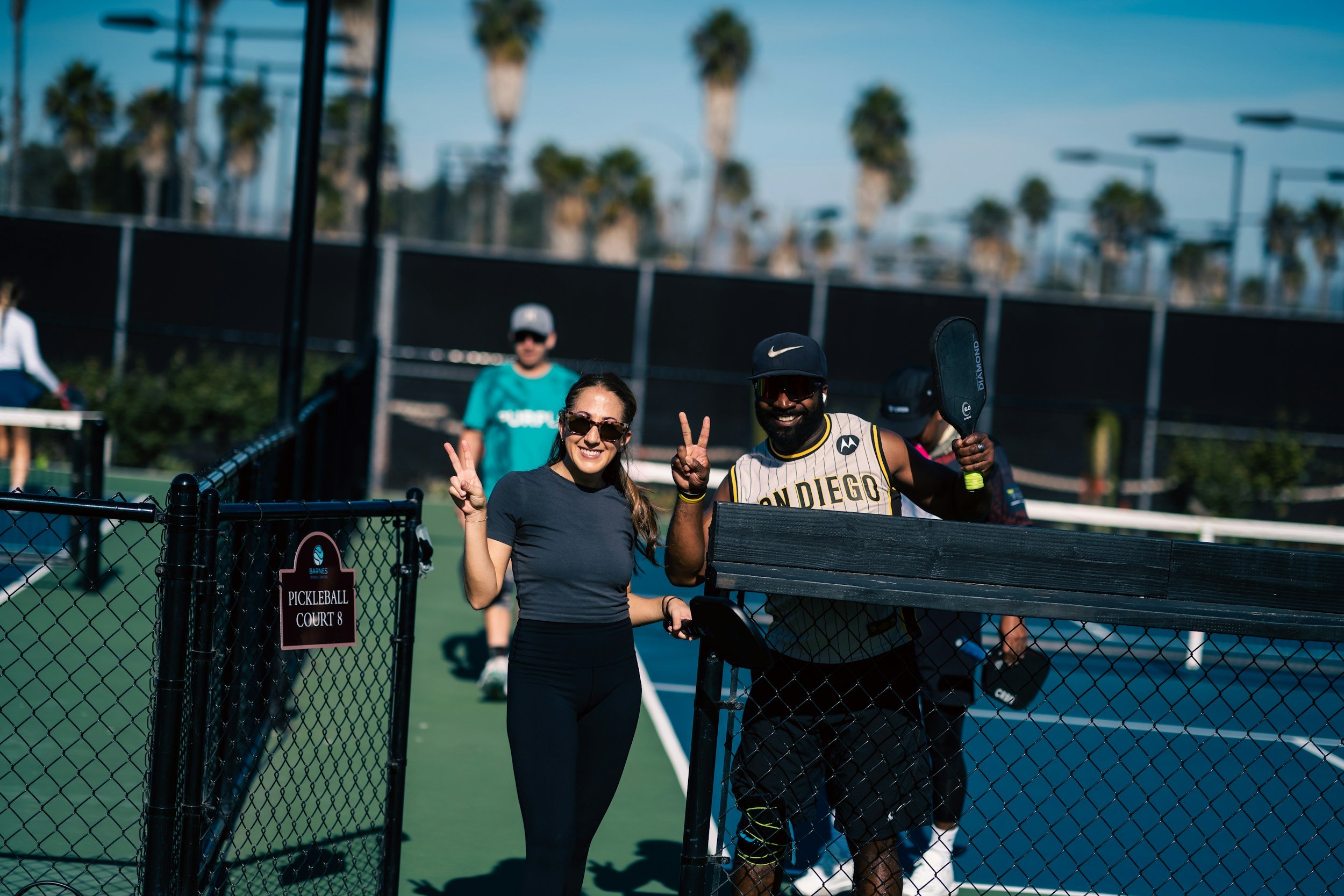
A massive, nine-year study published in the British Journal of Sports Medicine followed over 80,000 people, ranging from 30 to 98 years old. The results? People who played racket sports were 56% less likely to die of cardiovascular disease, and 47% less likely to die of any cause! Those are game-changing numbers. And the best racket sport right now is pickleball. Pickup a paddle and play long rallies even if it is your first time!
Let us understand why this is the case.
Cardiovascular benefits: You are constantly moving on the court. When you are near the kitchen, rallies get faster. These quick rallies keep your heart rate up, giving your entire cardiovascular system an incredible aerobic workout.
Balance and Weight Shifting: The constant lateral movements require you to lunge, reach and pivot constantly, dramatically improving your balance and core stability.
Brain Exercise: Pickleball is a high speed chess. When the ball is coming towards you for a response, your brain is actively working on a strategy for the next shot. Should you dink straight, cross, lob it, speed up etc. You are constantly evaluating your opponent’s game and anticipating their next shot. This sharpens your rapid-fire planning and decision making skills.
Hand Eye Coordination: This rapid decision has to translate into your shot and your movement in microseconds. Your body and brain constantly work with each other to harmonize this and continue improving your reflexes.
The Social Aspect: Last but not the least, it is impossible to play this sport without laughing. You are meeting new people, making new friends, building a camaraderie when playing as a team. What’s better than this in slashing stress and boosting your mood?
Now The Cost - With Pickleball, You Are Using Your Body More Than Building It…
But here’s what you need to understand. Pickleball or any other racket sport is more than a workout. Your body’s wear and tear rate is higher than your muscle/tissue/bone regeneration rate. There is more wear and tear in your muscles, connective tissues and bones. What happens when you keep driving your car without periodic servicing? That’s the same analogy of playing pickleball without appropriate strengthening and conditioning. With age, this get’s worse!
Dr. Olu Owoeye BPT, MS, PhD, Associate Professor, Dept of Physical Therapy & Athletic Training at Doisy College of Health Sciences at St Louis University, has done extensive research on this. Click here to read some fascinating stats from his research on the injuries in pickleball players.
The most important contributors to injuries in pickleball are:
Repetitive Strain: Per Dr. Oweye’s findings, overuse injuries account for almost 35% of reported injuries. These injuries result in repeated stress accumulation. Here are some common overuse injuries:
| Injury | Why It Happens |
| Pickle Elbow | Repeated backhand Shots |
| Golfer's Elbow | Repeated powerful forehand strokes like serves, deep shots from the service line or the transition zone |
| Shoulder Impingement | Repeated arm swings for drives, volleys or overhead shots |
| Patellar Tendonitis | Repeated braking and eccentric knee loading during frequent stopping and directional changes |
| Achilles Tendinitis | Repeated elastic loading of Achilles tendon during small hops, split steps, and quick reactive footwork |
| Carpal Tunnel Issues | Repetitive wrist flexion and compression during soft shots and dinking |
| Stress Fractures | Can happen in various parts depending on the type of movement |
| Hip Impingement | Repeated internal hip rotation with limited mobility, especially during open stance shots |
Acute Overload: A single movement or event creates more force than the tissue, muscle or bone can handle, so the injury happens suddenly. Some common examples are:
| Injury | Why It Happens |
| Wrist Sprains | Sudden excessive wrist extension or deviation during off-center or late ball contact |
| Achilles Tendon Rupture | Explosive push-off or sprint start with sudden high tendon load, especially during aggressive first step acceleration |
| Ankle Sprains | Poor landing mechanics or lateral instability after jumps, especially near the net |
| Hamstring Pull | Maximal sprinting or chasing shots requiring sudden acceleration with insufficient eccentric strength |
Bio-mechanical/Form Breakdown: The movement pattern becomes inefficient or misaligned, so the body puts stress on the wrong structure or in the wrong direction.
| Injury | Why It Happens |
| ACL Tear | Hard stop or change of direction with knee valgus and poor hip control, especially during unplanned deceleration |
| Groin Pull | Deep or lateral squat with excessive adductor stretch or weak control during lateral movements |
| Meniscus Tear | Loaded knee flexion with twisting or rotation, especially when rising from deep squat positions |
| Herniated Disc | Spinal flexion under load or repeated bending with poor core bracing, especially when reaching low balls |
| Ligament Tears (ACL/MCL) | Planted foot with rotational force and poor knee alignment during pivots or direction changes |
| Meniscus Twists | Twisting motion in a loaded knee, especially during quick pivots or recovery steps |
| Shoulder Labrum Tear | High-force overhead or extended reach shots with poor shoulder stability |
There are other less common injuries or accidents such as fractures caused by falls, eye injuries caused by a fast ball, head injuries caused by partner to partner collision or paddle hits.
Hence it is very important to understand what movements are you performing at high intensity and/or high frequency that exposes you to some of these injury risks. Play On Pickle’s patent pending AI can uncover these movement patterns for you and give you that visibility. Another important aspect to keep in mind is appropriate gears. The shoe you use should be suitable for the courts you play on. The paddle you use should match your play style. For example, if you play more backhand and wrist shots, head heavy paddles may not be the choice for you. Play on Pickle will also recommend the right gears for you based on your movement patterns.